Story
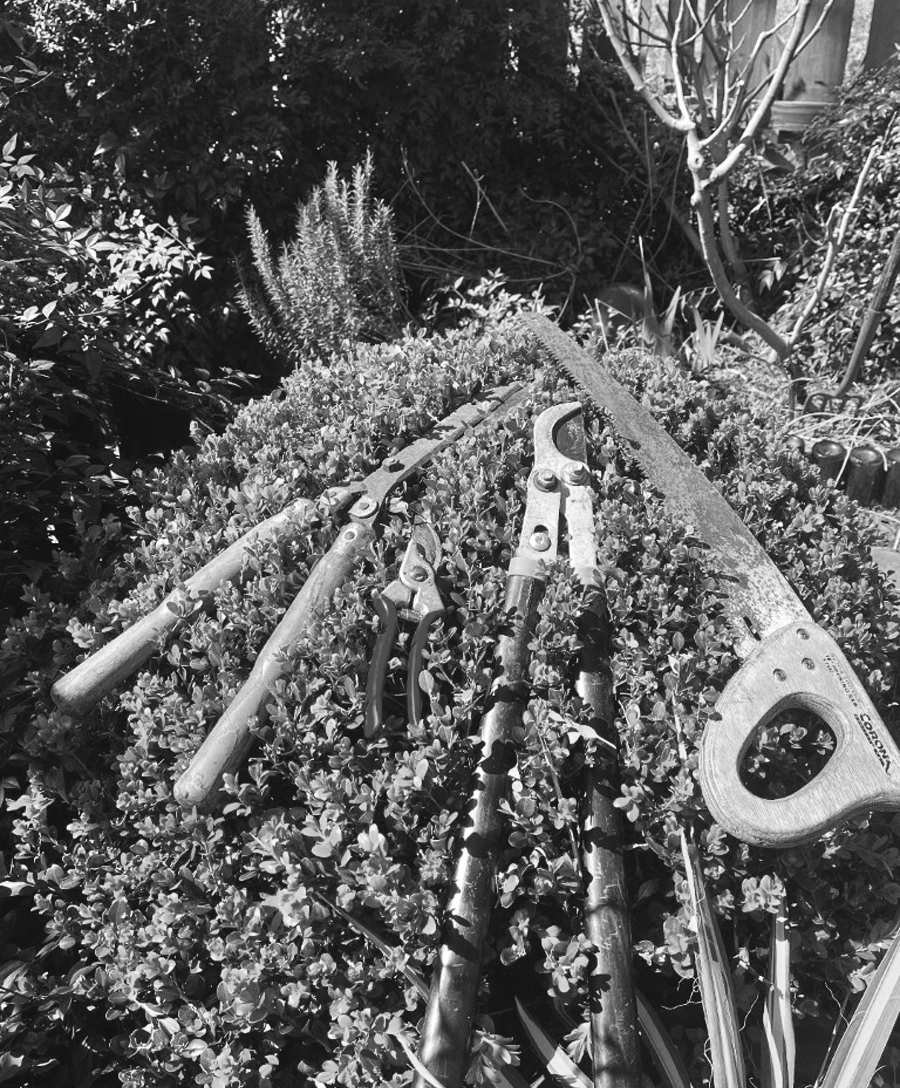
Felder's Essential Pruning Tools
Ironic, that a guy who hasn’t cut his hair since his navy days loves to prune shrubs. Like shaving my neck, trimming the moustache, and plucking errant eyebrows, keeping the fig compact and easy-toharvest and the...
Ironic, that a guy who hasn’t cut his hair since his navy days loves to prune shrubs. Like shaving my neck, trimming the moustache, and plucking errant eyebrows, keeping the fig compact and easy-toharvest and the boxwood a tight green gumdrop, sometimes it’s gotta be done.
The simple chore can be confusing, depending on types of plants and seasons. I go by bottom-line general guidelines, using just hand shears, loppers for bigger branches, pruning saw for big limbs, and scissors-like hedge shears.
First, on cutting the lawn. Number one cause of thin, weedy lawns is tied to our obsession for keeping turfgrasses cut low, which looks nice but seriously weakens most grasses. Without lecturing you on what you prefer, or having you fire your lawn care service because the workers are untrained or too lazy to adjust wheel settings, it really does make a difference when you mow at the right height for your type of grass - high for St. Augustine, low for Bermuda, and in between for centipede and zoysia. Every time, all the time.
This alone accounts for over 80% of the quality of your lawn, its density, root depth, weed resistance, and weather tolerance. The only nonessential but quality-control thing I would add is that if you take the time to sharpen the blade once or twice a year, the cut will be clean and crisp, not leaving the lawn with a dull brown haze. To make this easier to get around to, keep a spare blade to swap out.
Next comes shrub shearing, keeping hollies, boxwoods, and other hedge or foundation plants clipped into ball, box, or cone shapes. The more you shear, the tighter the plant surface will appear, but stop shearing in late fall or the tender new growth will brown out in the first freeze; wait till after a frost to neaten for the winter. R e j u v e n a t i n g overgrown shrubs, cutting them way back and starting them over, has been done forever (don’t you wish this could be done with kids?). Four things to keep in mind when rejuvenating really hard: new growth sprouts right where you make cuts, so cut lower and layer your cuts; go back later and tip prune the new sprouts a time or two so they bush out instead of shooting up overhead; prune summer bloomers (shrub roses, altheas, crape myrtles (if you dare), hydrangeas, gardenias, figs, abelia) in the winter; and prune spring bloomers (climbing roses, azaleas, spirea, nandinas, hollies that make berries, blueberries) after they flower or fruit.
When setting out figs and other fruit trees, cut each to between knee and thigh high to make it branch out low with a stronger framework; no commercial grower would fail to do this, but very few home gardeners understand how much this helps in the long run. From then on, it’s a matter of thinning cluttered or damaged stuff, keeping the plants short and open in the center.
When removing or thinning broken, dead, or wayward branches or limbs from anything, never leave stubs - cut nearly flush with where they sprout, to help fast healing and less chance of decaying into the plant later. BTW pruning sealants are cosmetic only - no need to use pruning sealants except to make others think you know what you are doing.
You can find more detail online. Only nonessential thing I will add is for those of you who choose to prune your crape myrtles: It’s like pruning roses, it is not a horticultural sin, don’t let body shamers get you down. As Yoda put it, “Do, or do not.”