
Story
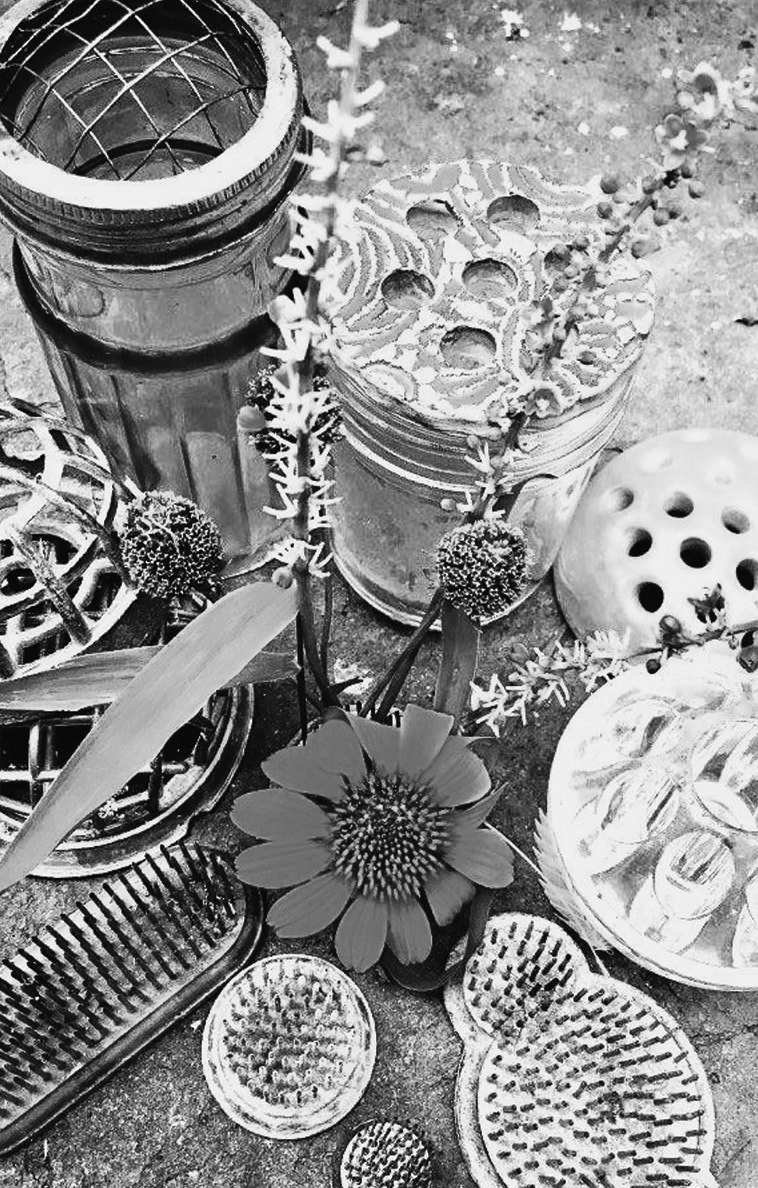
Felder's Flower Frogs
In these somewhat-stressful times, I make myself wander my tranquil garden at least once a day. Not to actually do anything constructive, just for a bit of attention-restoration, to reset my brain a break from...
In these somewhat-stressful times, I make myself wander my tranquil garden at least once a day. Not to actually do anything constructive, just for a bit of attention-restoration, to reset my brain a break from dopamine-seeking screen time.
Usually all it takes is simply sitting by the splashy water garden, looking at tree leaves, or from the soft fascination of following a bee from flower to flower. And I bring a bit indoors by snipping a handful of flowers for an always-ready vase.
Bringing clippings indoors for floral arrangements isn't complex; it's basically just countless variations of standing up a few flowers and maybe some bits of foliage, twigs, or grasses in a container. You can't actually mess up. Just do shove 'em in and hold your head up proudly.
Unlike my grandmother Louise, an accredited flower show judge who cherished her scrapbooks of blue ribbons, my down-to-earth horticulturist great-grandmother Pearl confided that her arrangements would never win awards at her garden club. She encouraged me to just please myself, cynically adding that if I want ribbons and awards, get used to jumping through hoops dictated by others.
My first formal floral design course at MSU, way back in 1977, was taught by renowned floristry professor Ralph Null who also loved Nature's largesse. He offered simple but solid recipes for assembling even wildflowers in the "line, mass, and filler" combination of visually heavy and roundish flowers, plus something tall and spiky to draw the eye downward to the main show, softened with a little frilly filler, and maybe a cascading bit tucked in.
I learned lots of mechanics, including how to stand everything upright in floral foam, a block of lightweight but fairly rigid green stuff that absorbs water like a sponge to keep flowers and foliage stems hydrated so they last longer.
But long before floral foam my talented family florists used flower frogs made of lead, glass, bronze, wire, or decorative ceramic, all which hold even the trickiest flower arrangements firmly in place. Aside: Not even the editor of The Flower Frog Gazette knows why they are called frogs; best guess is about how the holders sit in water like a frog.
Any, I inherited over thirty vintage flower frogs from both Pearl and Louise, each a quintessential, no-moving-parts device. There are heavy glass or ceramic bases with holes (one of mine has a larger middle hole for a candle), lead "pincushion" frogs with lots of thin, sharp spikes that stems can be stabbed onto, "hairpin" frogs which feature upright wire loops, and heavy metal mesh "cage" frogs hold up larger stems at various angles.
Two of my favorites fit atop glass Mason jars; one is simply hardware cloth cut to fit inside a screw-on jar lid; the other is a heavy ceramic disk with holes. Along those lines, when I teach children flower arranging I have them poke drinking straws into pencil-size holes into Irish potatoes, fill with water, and put different shape and color flowers in each.
My generations of heirloom frogs are displayed on a shelf, weird little memorable touchstones reminding me of talented relatives and mentors and countless flower shows in which I myself have served as a judge. But nearly every week of the year, even in the dead of winter, I choose one to fit a vase or bowl, and go outside to gather a bit of my garden to create a colorful ditty for my little cabin.
It's a bit of lagniappe from making myself get outside to stop worrying, at least for a moment, about the fussiness of life.